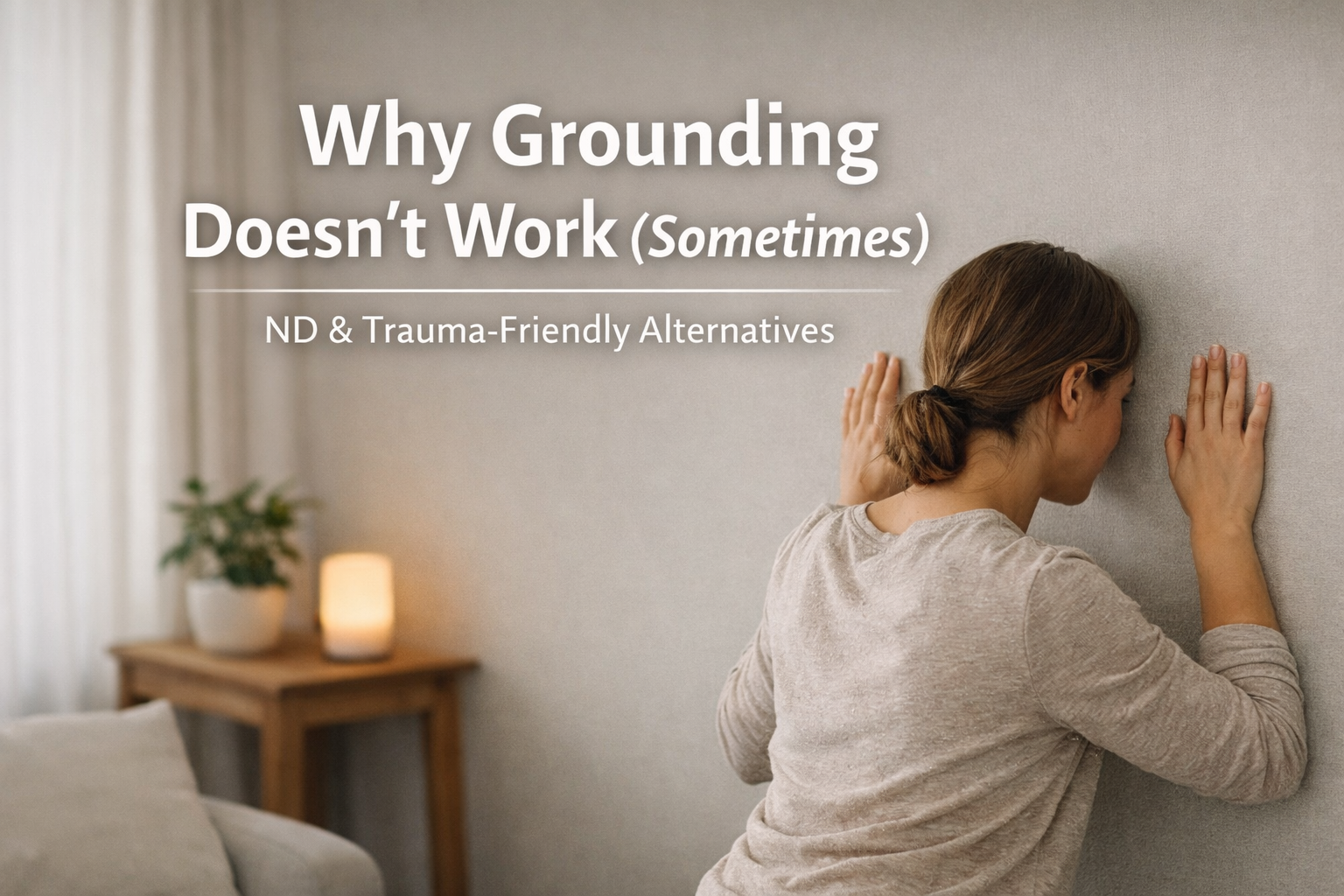
How to get through emotional overwhelm and nervous system overload without making things worse
When everything feels like too much — when your body is buzzing, frozen, panicked, or overloaded — you don’t need insight, motivation, or reassurance.
You need something that helps you get through the moment safely.
This post is for autistic, ADHD, BPD, and C-PTSD adults who experience emotional overwhelm, meltdowns, shutdowns, panic, or intense urges — especially if you’ve been told you’re “overreacting” or “too much” when your nervous system hits its limit.
When everything feels like too much, it’s usually nervous system overload

For many neurodivergent and trauma-affected adults, emotional overwhelm doesn’t build slowly.
The nervous system can move from:
I’m okay to This is unbearable very quickly.
Long-term trauma teaches the body that threat can come from:
- conflict
- rejection
- emotional closeness
- being misunderstood
- sudden change
Neurodivergent nervous systems often add:
- higher sensitivity to stress
- stronger internal signals
- slower recovery once activated
So when everything feels overwhelming, it’s not a failure of character.
It’s nervous system overload — your body is prioritizing survival, not clarity.
What actually helps during emotional overwhelm (and what doesn’t)
When intensity is high, a lot of common advice backfires.
At peak overwhelm, trying to:
- calm down
- think clearly
- analyze your feelings
- “be reasonable”
often just adds shame.
What does help at high intensity is containment.
Containment means:
- pausing before doing something irreversible
- reducing risk while your nervous system settles
- staying safe enough to think or reach out later
Relief comes after containment — not before.
A simple way to orient: the 0–10 scale
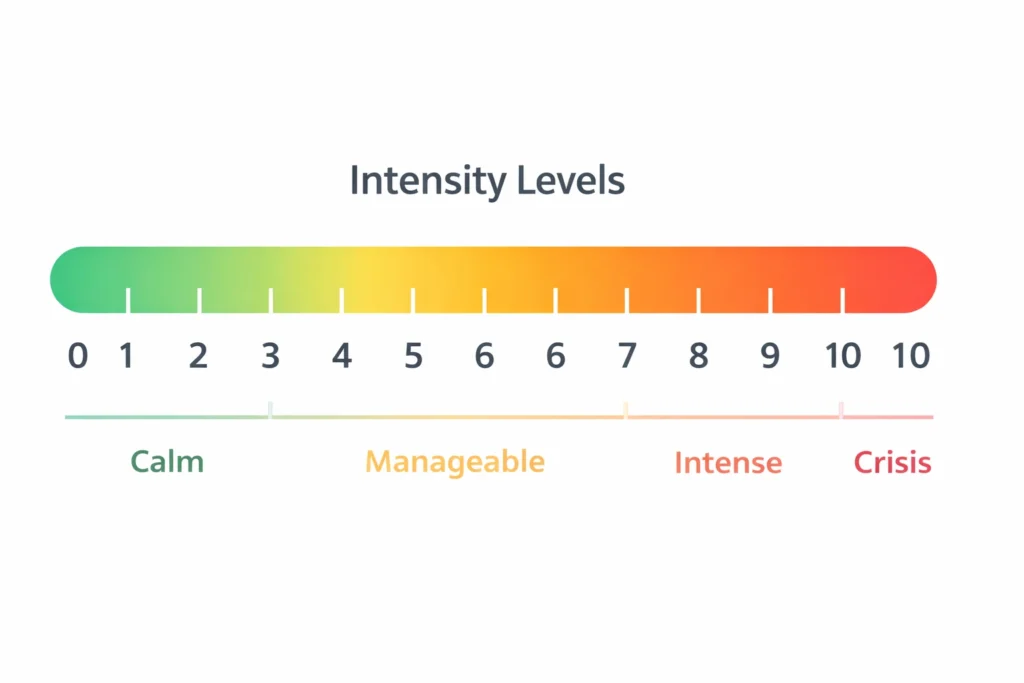
One of the most useful tools during nervous system overload is a 0–10 intensity scale.
This isn’t about exaggerating or judging yourself.
It’s about navigation.
0–3 (Green):
You can think. You have options.
4–7 (Yellow):
Emotions are louder. Thinking narrows. Spirals or shutdown may be starting.
8–10 (Red):
Meltdown, shutdown, panic, or intense urges.
Insight doesn’t land.
Your body feels unsafe.
At 8–10, this matters:
You don’t need better thoughts.
You need nervous system support.
What helps at 8–10/10: a simple three-step approach
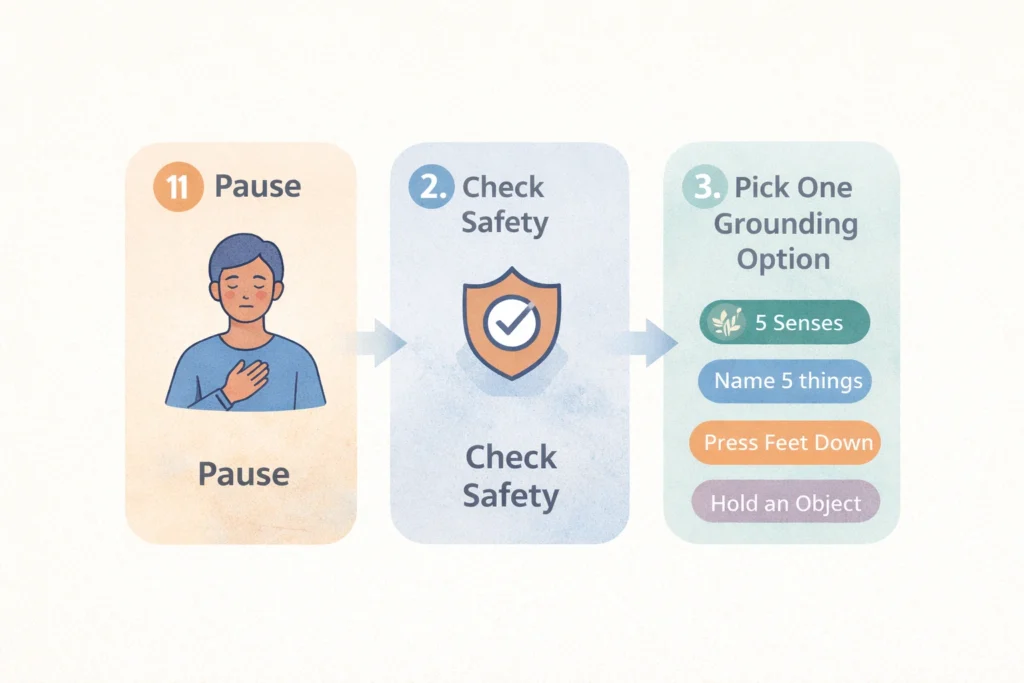
When everything is too much, simpler is better.
1. Pause the next move (10–30 seconds)
This isn’t about deciding what to do.
It’s about not doing the most damaging thing yet.
Pausing helps interrupt:
- rage-texting
- quitting abruptly
- escalating conflict
- other self-destructive behaviors
Even a short pause reduces risk.
2. Check basic safety
Ask yourself:
- Am I safe enough right now?
- Is anyone else in immediate danger?
This isn’t about feeling okay.
It’s about preventing irreversible harm.
If safety isn’t there, reaching out for urgent support or emergency services is part of the plan — not a failure.
3. Pick one grounding option
Not five.
Not the perfect one.
Just one thing that might make this moment slightly less intense.
Grounding techniques for nervous system overload
When you’re overwhelmed, grounding doesn’t need to feel good.
It just needs to be less awful than the urge.
Options many neurodivergent and trauma-affected adults find helpful:
- cold water on your face or holding ice
- slow breathing with a long exhale
- pressing your body into a wall or floor
- heavy blankets or tight clothing
- ear defenders, dim lights, or quiet space
- naming what you can see or feel
If intensity drops even half a point, it’s working.
Time — not insight — is what brings intensity down.
When everything is too much, having a plan helps
If you’re reading this while overwhelmed, it can help to have something concrete to follow.
I created a free, plain-language support plan called When Everything Is Too Much.
Clinically, this type of tool is often called a crisis plan — meaning extra structure during high-intensity moments, not emergency care and not a replacement for professional support.
The free PDF includes:
- a simple 0–10 check-in
- a short pause → safety → grounding checklist
- a grounding menu you can circle ahead of time
- a one-page safety snapshot
👉 Download the free plan here
(This resource doesn’t replace therapy or emergency services. If you feel unable to keep yourself safe, reaching out for immediate support matters.)
Why this approach works for ND and trauma brains
During emotional overwhelm, your nervous system isn’t asking:
“What’s the right insight?”
It’s asking:
“How do I reduce danger right now?”
Simple structure helps because it:
- reduces cognitive load
- limits impulsive actions
- buys time for intensity to come down
That’s how you protect your future self.
Frequently Asked Questions About Emotional Overwhelm & Nervous System Overload
What does “everything is too much” actually mean?
When people describe “everything being too much,” they’re usually talking about nervous system overload, not weakness or lack of coping skills.
This can look like:
- meltdowns, shutdowns, or panic
- feeling frozen, frantic, or emotionally flooded
- intense urges to escape, quit, or make a drastic change
At this level, the brain’s thinking systems go offline and the body shifts into survival mode.
Is emotional overwhelm the same as a panic attack or meltdown?
Sometimes — but not always.
Emotional overwhelm is a state, not a diagnosis. It can include:
- panic attacks
- autistic meltdowns or shutdowns
- trauma responses
- intense dysregulation without clear panic symptoms
What matters most is loss of access to flexible thinking, not the label.
Why does emotional overwhelm hit so fast for autistic or ADHD adults?
Autistic and ADHD nervous systems often:
- register stress and sensory input more intensely
- react faster to perceived threat or rejection
- take longer to return to baseline
When trauma is also present, the nervous system may be primed to escalate quickly as a protective strategy.
This isn’t a personal failure — it’s biology shaped by experience.
What should I do when I’m at an 8, 9, or 10 out of 10?
At high intensity, the goal is not calm and not insight.
The goal is:
- not making things worse
- reducing immediate risk
- staying safe enough for the intensity to pass
That’s why simple steps — pausing, checking safety, and choosing one grounding option — are often more effective than “thinking it through.”
Do grounding techniques actually work when I’m overwhelmed?
They don’t always feel good — and they don’t need to.
At high intensity, grounding works if it:
- lowers intensity even slightly
- interrupts impulsive action
- helps your body feel a little safer
A drop from 10 to 9.5 still matters.
What’s the difference between a crisis plan and therapy?
A crisis or support plan provides structure for high-intensity moments when thinking is limited.
It:
- helps you pause
- reduces harm
- supports safety in the moment
Therapy focuses on long-term healing, insight, and change over time.
They serve different roles, and one doesn’t replace the other.
Do I need a diagnosis to use a crisis or grounding plan?
No.
Support tools like grounding plans are diagnosis-agnostic.
They’re based on how nervous systems respond to overwhelm — not on labels.
You can use them while diagnoses are still being explored.
When should I reach out for professional or emergency support?
If you feel unable to keep yourself safe, or someone else is in immediate danger, external support matters.
Crisis or grounding plans are not a substitute for emergency services or professional care — they’re meant to help you bridge moments, not handle everything alone.
If everything feels like too much, that doesn’t mean you’re failing
Needing support during intense moments doesn’t mean something is wrong with you.
It means your nervous system is doing exactly what it learned to do under stress.
A small next step that helps many people:
download the plan and keep it somewhere easy to reach — before the next spike.
You don’t have to solve your whole life today.
Getting through the moment safely is enough.
Important note
This post and the free resource are for education and support — not a replacement for therapy or emergency care.
If you’re in immediate danger or unable to keep yourself safe, please contact local emergency services or a crisis line.