BPD vs Autism: Why These Two Conditions Are Often Confused
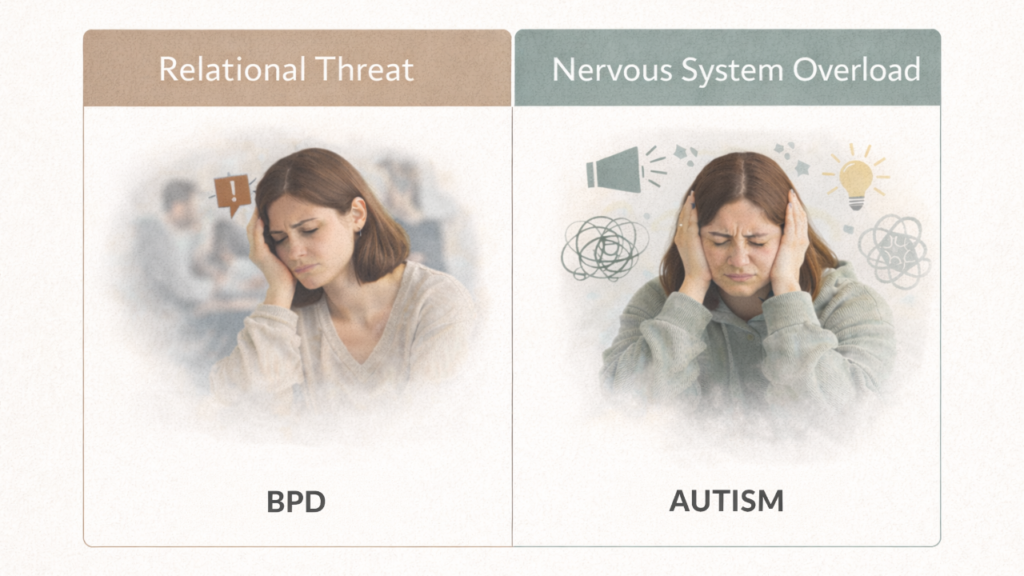
BPD vs autism often gets confused because both can involve emotional intensity, shutdowns, and relationship stress. The difference is that BPD distress often centers on relational threat, while autistic distress more often centers on overload.
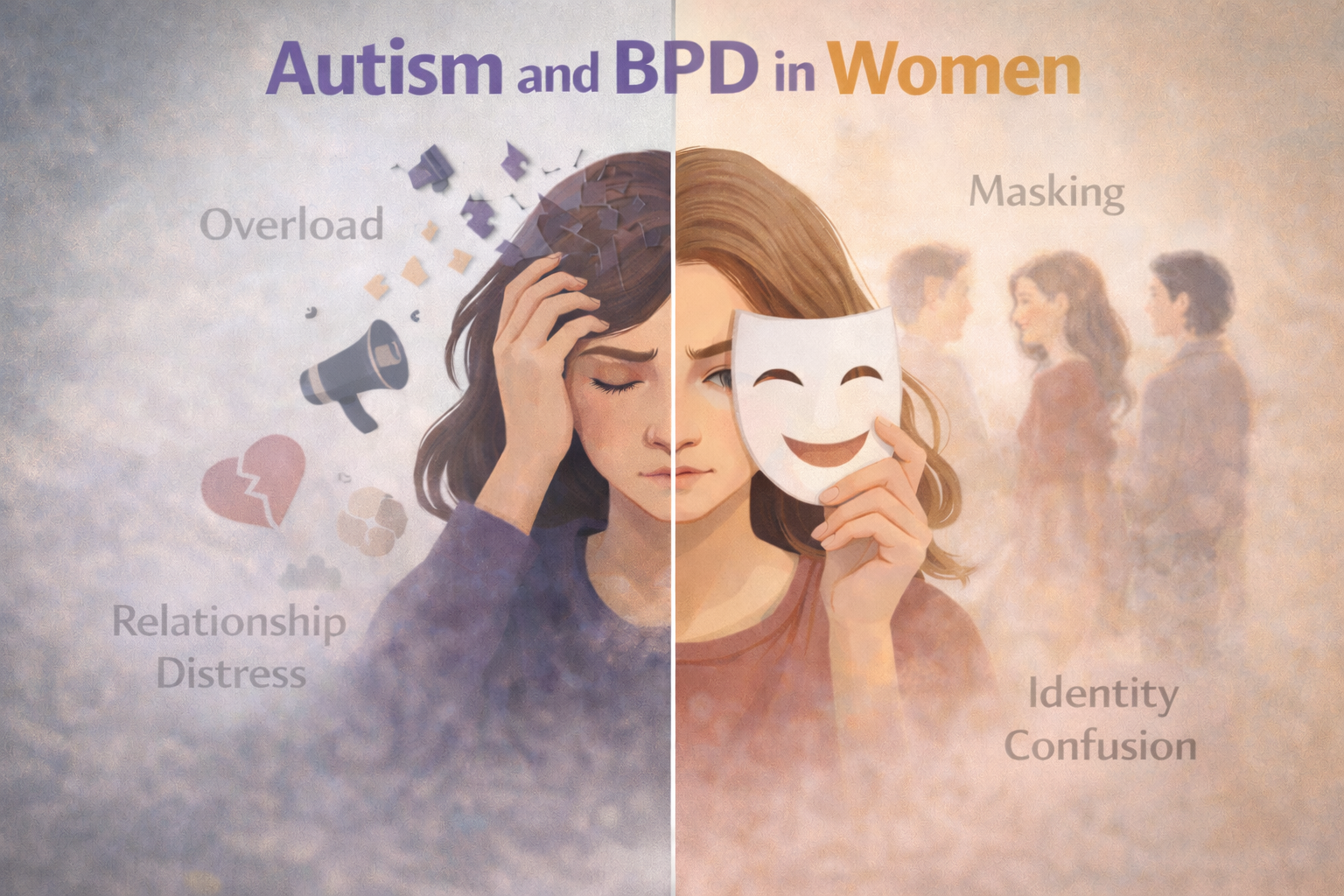
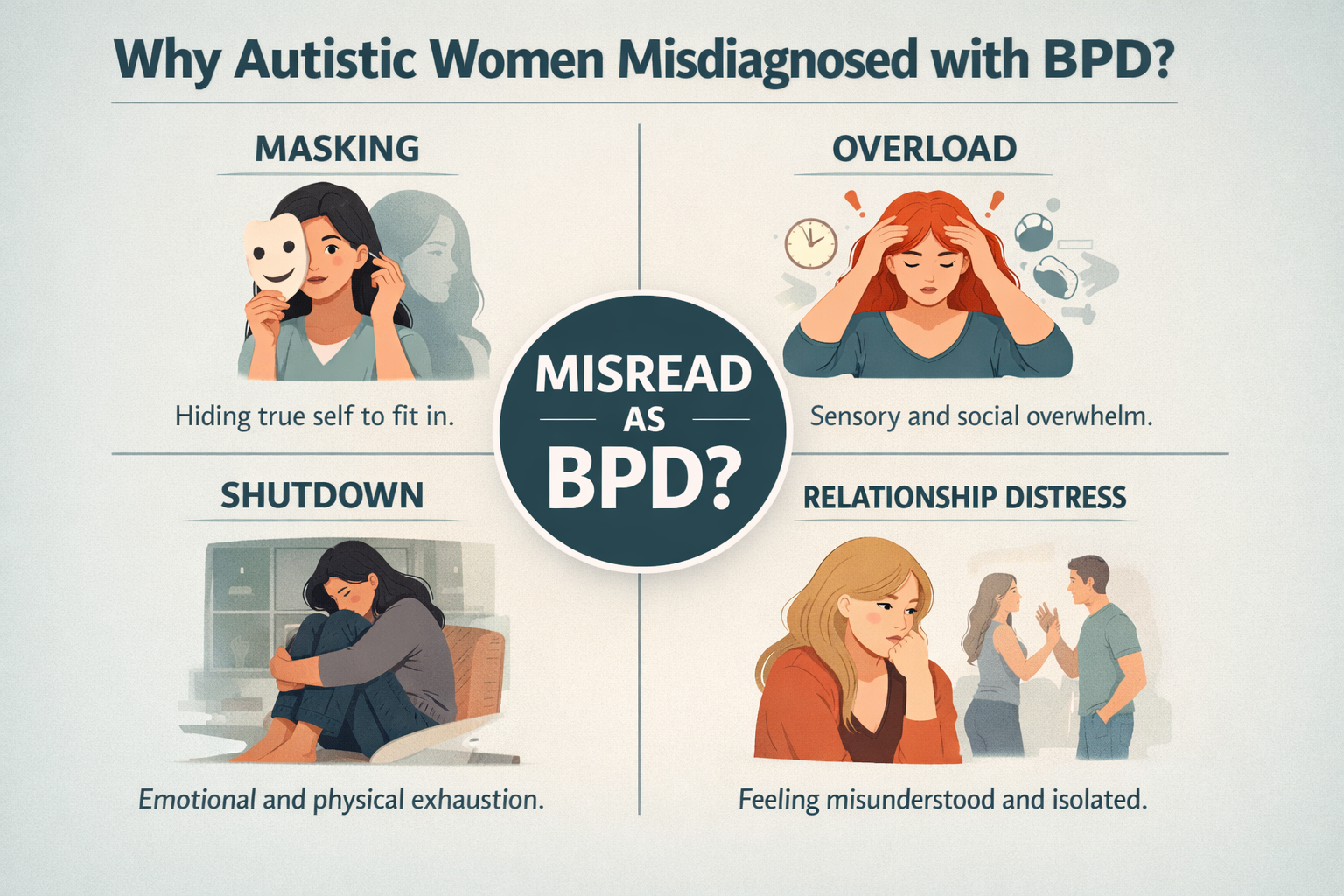
BPD vs autism gets confused all the time, including in women and AFAB adults, where autistic traits may be more likely to be masked or misread.
Both can involve shutdowns, emotional intensity, relationship stress, going blank, and feeling misunderstood. From the outside, a meltdown, shutdown, or spiral can look very similar.
One useful difference is often not the behavior itself, but what the person’s system seems to be reacting to. For some people, the trigger is relational threat — rejection, abandonment, shame, criticism, or the feeling that connection is breaking. For others, the trigger is overload — too much noise, too many demands, social confusion, masking exhaustion, change, or not enough recovery.
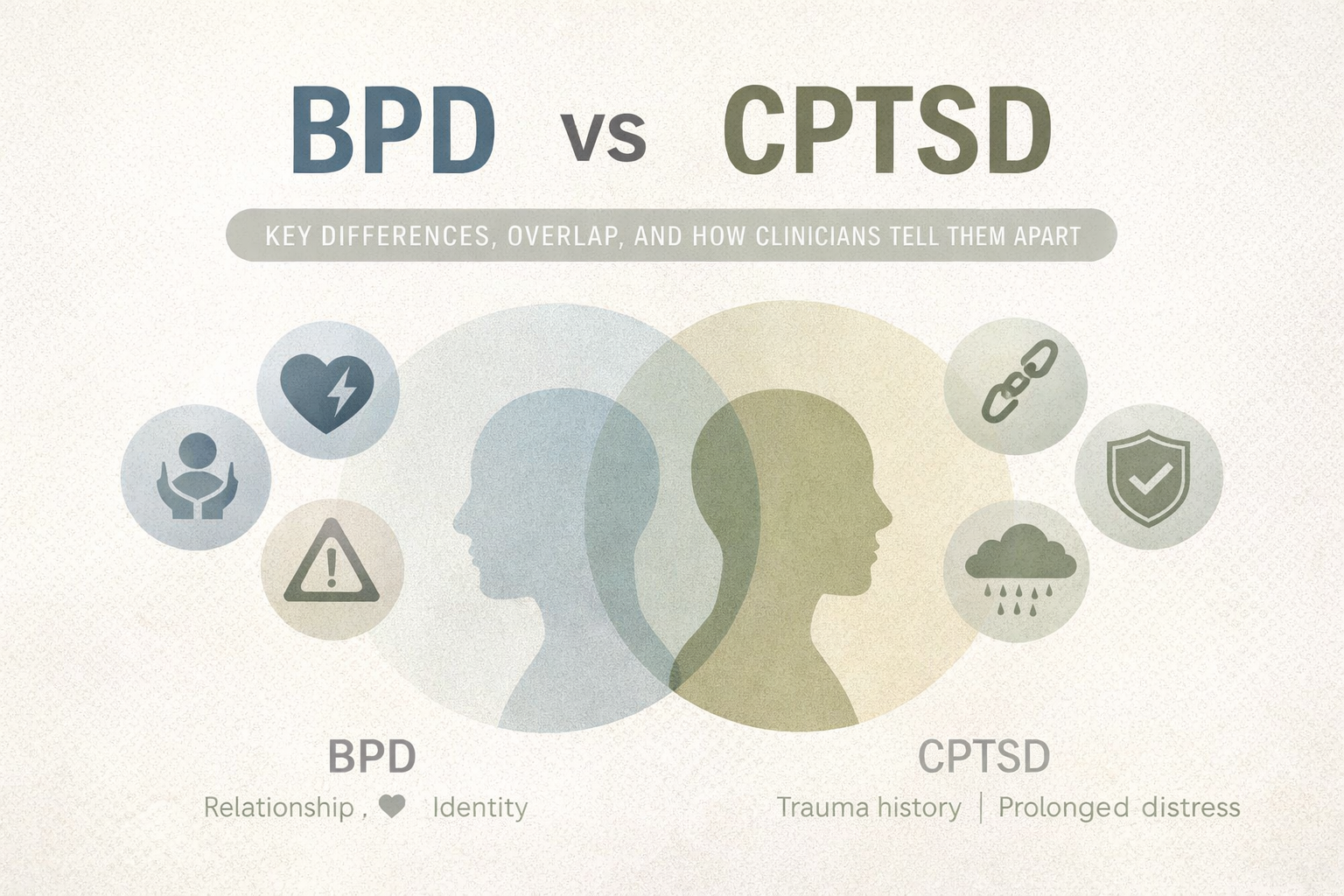
Some people genuinely experience both, and trauma can complicate the picture.
That is why the underlying driver matters. If you misread the driver, you may reach for support that does not match what is actually happening.
60-Second Answer
When people try to sort out BPD vs autism, they often focus on the reaction: crying, shutting down, spiraling, or going blank.
A more useful question is:
What set the reaction off?
In broad strokes, some BPD-related patterns may intensify around rejection, abandonment, criticism, shame, or fear of losing connection.
Some autistic distress may intensify around sensory overload, social confusion, masking exhaustion, change, or too many demands without recovery.
The outside reaction may look similar.
The internal driver may be different.
That difference can change what relationships feel like, what a crisis moment feels like, and what may help first in the moment.
This article is not a diagnostic tool. It is meant to help people think more clearly about patterns that are often confused or misinterpreted.
| Feature | BPD-related distress | Autistic distress |
| Common trigger | Fear of rejection, abandonment, or relational rupture | Sensory, social, or cognitive overload |
| Internal experience | Relational threat | Processing overload |
| Common response | Urgent need for reassurance or repair | Shutdown, escape, reduced speech, need for recovery |
| What may help first | Slowing the interaction, grounding, relational clarity | Lower stimulation, reduce demands, recovery time |
If you tend to reach the point where everything suddenly feels too loud, too fast, or too much, download When Everything Is Too Much.
It is a printable reset plan designed for the exact moment your brain goes narrow, your words disappear, or everything feels like it might blow up.
Table of Contents
Why BPD vs autism gets confused
Difference 1: What triggers the reaction
Difference 2: What relationship distress feels like
Difference 3: What a 9/10 moment is actually about
Difference 4: Why identity confusion happens
Difference 5: When the pattern usually starts
If You Already Reacted (Repair in 10 Seconds)
Why BPD vs Autism Gets Confused
The confusion makes sense.
From the outside, both patterns can include:
Strong emotional reactions
Shutdowns or going silent
Relationship conflict
Feeling misunderstood
Going blank under pressure
But behavior is only the surface.
A person experiencing BPD-related distress may be reacting to the feeling that connection is breaking or abandonment is close.
An autistic person may be reacting to sensory input, social decoding pressure, unpredictability, or the cumulative exhaustion of masking.
And there can be overlap. An autistic person may also carry attachment injury or trauma. Someone with BPD-related patterns may also experience sensory overload or shutdown.
That is why the better question is not “Which label fits the reaction?”
The better question is:
What was my system reacting to?
These patterns can overlap, and no single reaction is enough to sort them out on its own.
Universal First Move
Before trying to sort out BPD vs autism, ask one question:
What was my system trying to protect me from right before things escalated?
Was it:
Rejection
Distance
Humiliation
Fear of being left
Or was it:
Noise
Confusion
Unpredictability
Too much input
Not enough recovery
The trigger often tells you more than the reaction itself.
5 Differences Most People Miss in BPD vs Autism
Difference 1: What Triggers the Reaction
What it feels like
Two people can have the same reaction from the outside, but the trigger underneath it can be very different.
Signs
A short text suddenly feels threatening
Criticism or a tone shift sparks immediate panic
Noise or social demand builds into overwhelm
Holding it together all day ends in shutdown later
One more demand pushes the system over the edge
Do this first
Pause and name the moment right before the reaction.
Ask whether it felt more like relational danger or overload.
Notice whether reassurance or reduced input helps more.
One tool
Use a simple trigger check.
Write two sentences:
“What happened right before I escalated?”
“Did it feel more like losing connection or too much input?”
That quick distinction can reveal a lot.
Key point
The trigger often tells you more than the intensity does.
Difference 2: What Relationship Distress Feels Like
What it feels like
Both patterns can involve relationship struggle, but the inner experience often differs.
Signs
Delayed replies feel loaded or threatening
A distracted tone reads as danger
Conversations replay in your mind afterward
It is hard to tell whether someone was joking or criticizing
Connection is wanted, but decoding it is exhausting
Do this first
Notice the first thought after a difficult interaction.
Write it down exactly.
Ask whether the pain is more about abandonment or more about confusion.
One tool
Try the first-thought split.
Complete one of these sentences:
“What hurts most is the fear that…”
“What hurts most is the confusion about…”
Key point
“I’m scared they’re leaving” and “I don’t know what just happened” can feel very different internally, even if the outside reaction looks similar.
Difference 3: What a 9/10 Moment Is Actually About
What it feels like
At a 9 out of 10, the outside reaction can look equally intense. The internal experience often provides more clues.
Signs
Urgent need to fix the relationship immediately
Racing thoughts about being left
Buzzing, nausea, head pressure, or losing words
Urge to text repeatedly or demand reassurance
Urge to hide, escape input, or stop talking
Do this first
Delay major decisions during the peak.
Lower stimulation if your system feels flooded.
Ask whether the moment feels more like relational emergency or processing collapse.
One tool
Use a quick 9/10 reset check.
Ask yourself:
What feels threatened right now?
What should I not do in the next ten minutes?
What lowers the intensity even slightly?
Key point
A meltdown, shutdown, or spiral does not tell you the whole picture by itself.
If those 8 or 9 out of 10 moments sound familiar, download When Everything Is Too Much.
It gives you a simple reset plan for the exact moment when thinking clearly becomes hardest.
Difference 4: Why Identity Confusion Happens
What it feels like
Identity confusion can appear in both BPD-related patterns and autism, but the source may differ.
Signs
Sense of self shifts depending on the relationship
Feeling empty after conflict
Uncertainty about what you actually like
Realizing you have copied others to fit in
Feeling split between performance and genuine self
Do this first
Notice when identity confusion shows up most strongly.
Ask whether it spikes around relational stress or long-term masking.
Start naming preferences privately without editing them.
One tool
Make two columns:
What changes when I feel relationally unsafe
What I have learned to do to seem acceptable
This can help clarify whether the confusion is more about relational insecurity, masking, or both.
Key point
Identity confusion can come from relational insecurity, masking, or years of adapting to chronic stress.
Difference 5: When the Pattern Usually Starts
What it feels like
Looking at early patterns can help clarify the picture.
Signs
Sensory sensitivity from childhood
Feeling socially out of step early
Copying peers to fit in
Needing predictability from a young age
Emotional distress becoming sharper once relationships become central
Do this first
Look at patterns across time, not single events.
Note early sensory or social differences.
Notice when relationship stress began intensifying reactions.
One tool
Create a life-pattern timeline with three sections:
Early childhood signs
Adolescent relationship stress
Adult overload or attachment patterns
Key point
“Present early” and “worse later” can both be true.
Try This Now
Ask yourself one question:
Do I need reassurance right now, or do I need less input right now?
Then act on that answer first.
For many people, that question interrupts escalation.
If You Already Reacted (Repair in 10 Seconds)
Try:
“I got overwhelmed and reacted quickly. I want to slow this down.”
or
“I think my system got flooded. I need a minute.”
Repair often works better than trying to explain everything while still activated.
Common Mistakes
Assuming intense emotion automatically means BPD
Assuming shutdown automatically means autism
Ignoring trauma when sorting patterns
Misreading masked autistic traits
Using shaming labels like dramatic or manipulative
Forcing one explanation too early
FAQs
Can autism be misdiagnosed as BPD?
Yes, it can happen, especially when autistic traits are masked and emotional distress becomes the most visible feature.
Can someone have both BPD and autism?
Yes. Some people experience both attachment-related distress and overload-related patterns.
What is the difference between autistic overload and BPD emotional dysregulation?
When people compare BPD vs autism, one common difference is that autistic overload often centers on too much input or social processing demand, while BPD-related distress often centers on relational threat or fear of abandonment. But no single reaction tells the whole story.
Why are women and AFAB adults often misdiagnosed?
Because autistic traits may be masked, socially imitative, or misinterpreted as emotional instability rather than recognized as autism.
Does shutdown always mean autism?
No. Shutdown can happen in many contexts. The trigger and internal experience matter more than the behavior alone.
What if I relate to both patterns?
That may reflect overlap between autistic traits, trauma, attachment-related distress, or emotional regulation differences. Careful assessment can help clarify what support works best.
What to Do Next
Because these patterns can overlap, a careful assessment usually looks at developmental history, trauma, sensory profile, relationships, and what tends to trigger distress over time.
If this topic resonates, watch the YouTube video “BPD or Autism? Here’s Where People Get It Wrong.”
It walks through the same five differences with real-life examples and a step-by-step explanation of how relational threat and overload can look similar from the outside but feel very different inside.
Keep When Everything Is Too Much nearby as a reset plan for the hardest minutes. If you are in immediate crisis or need urgent support, contact the 988 Lifeline: https://988lifeline.org/