Overwhelmed and Can’t Think? What to Do First

When you’re overwhelmed and can’t think, it can feel like everything is wrong at once. Your thoughts blur, your body reacts fast, and even small decisions feel impossible.
In moments like this, the problem usually isn’t that you lack coping skills. It’s that different kinds of overwhelm need different first steps — and most advice doesn’t tell you how to tell the difference.
This page gives you a simple nervous-system–aware map for what to do first when your brain feels offline, your mind goes blank when stressed, or everything feels urgent — so you don’t make things harder by choosing the wrong move.
60-Second Answer: What to Do First (Save This)
If you’re overwhelmed and can’t think clearly, start here:
- Pause for about 20 seconds. No texting. No deciding.
- Rate intensity 0–10. If it’s 8–10, delay big decisions.
- Notice what’s driving the overwhelm:
- Everything feels urgent / pressure to act → delay action + add grounding pressure
- Too much sensory or mental input / overstimulated → reduce stimulation first
- Sudden fear that feels old or familiar → orient to the present moment
- Use one grounding tool for 1–3 minutes. Then re-rate.
Even a small drop in intensity helps restore choice.
This is educational/self-help only, not therapy or emergency services. If you’re not safe or can’t keep yourself safe, call/text 988(US) or call 911.
Learn more at https://988lifeline.org/
Want this as a one-page printable you can glance at when thinking is hard?
→ Download When Everything Is Too Much
Quick Jump Links
- Why You Feel Overwhelmed and Can’t Think Clearly
- The universal first move
- If everything feels urgent
- If it feels like too much input
- If fear feels sudden or old
- A 10-second reset
- Repair if you already reacted
- Common mistakes
- FAQs
- What to do next
Why You Feel Overwhelmed and Can’t Think Clearly
When intensity rises, your nervous system shifts priorities. Instead of supporting nuance and planning, your system focuses on speed and protection. That’s why overwhelm often comes with:
- tunnel vision
- impulsive urges
- blankness or shutdown
- difficulty finding words
- a strong sense that something must be done now
This isn’t a personal failure. It’s how human nervous systems work under load.
The goal in these moments is stabilization — lowering intensity just enough so choice comes back online.
The Universal First Move (Before Anything Else)
No matter what kind of overwhelm you’re in, start here:
Pause your next move for about 20 seconds.
That means:
- no texting
- no quitting
- no explaining
- no deciding
Physically:
- put your phone face down
- place your hands on your thighs
- take one slow breath, with a longer exhale
This pause doesn’t solve anything. It interrupts momentum, which buys you enough space to choose a safer next step.
Next, do a 0–10 intensity check:
- 0 = calm, regulated
- 10 = maximum intensity
If you’re at 8–10, treat that as a decision-delay zone. Above this range, cognitive flexibility is reduced — even if your thoughts feel convincing.
If Everything Feels Urgent (Crisis-Type Response)
(Often called a crisis response or crisis spike.)
What this often feels like
This kind of overwhelm comes with a strong push to act immediately.
Common signs include:
- “I have to fix this now”
- an urge to send a message, quit, confront, or explain
- shame, panic, or fear driving action
- racing thoughts and heat in the chest
Urgency can feel like clarity, but they are not the same thing.
Do this first
If intensity is above 8/10, delay decisions.
Delaying does not mean avoiding forever. It means protecting yourself from choices made under peak pressure.
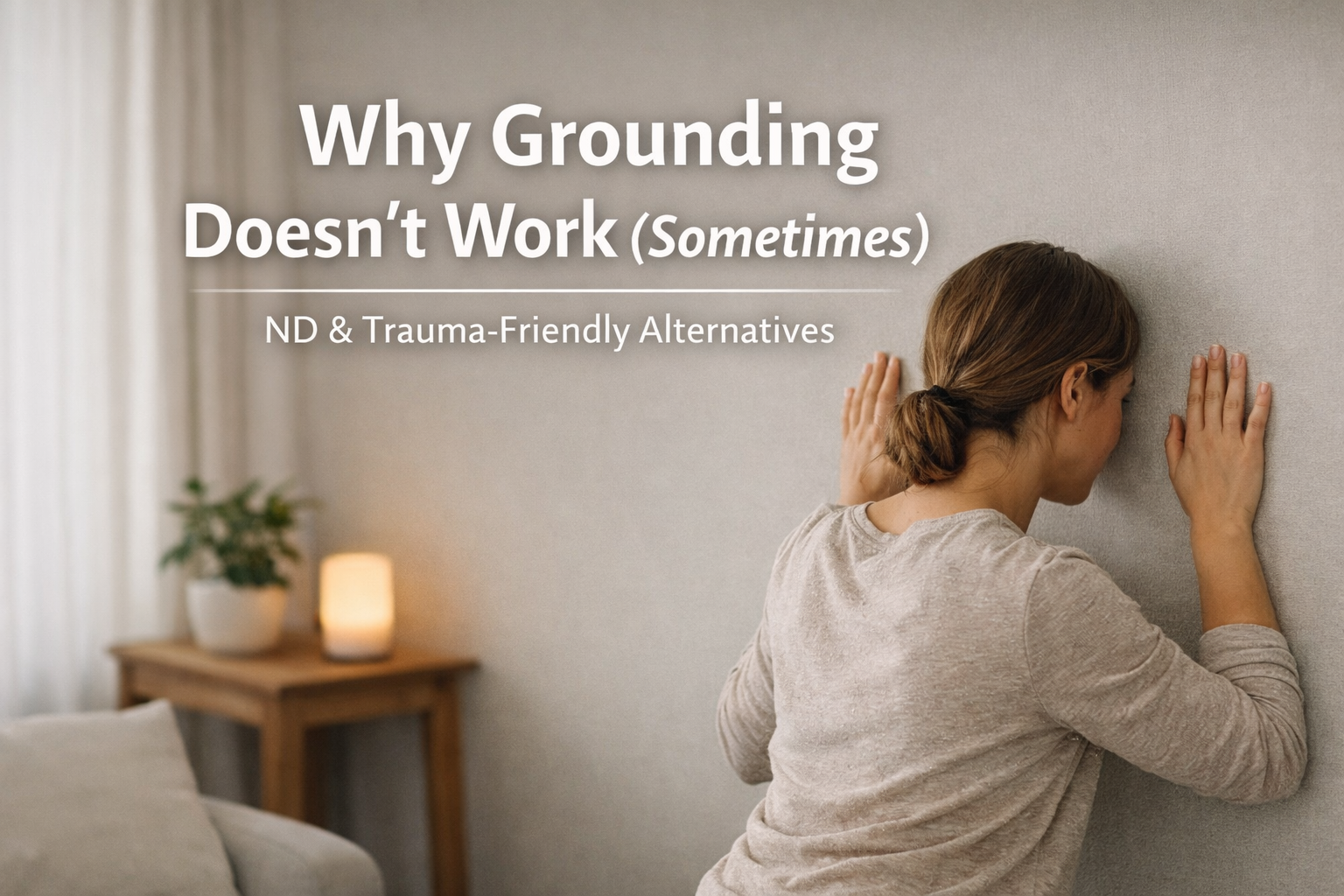
One tool: pressure grounding (1–2 minutes)
Try this:
- place your palms on a wall
- push firmly for 10 seconds
- release for 10 seconds
- repeat 3 times
- re-rate intensity
Many people notice urgency softens just enough to pause instead of react.
Coach line
“I’m at a 9/10. Delay decisions. Pressure first.”
If It Feels Like Too Much Input (Shutdown / Overload)
(Often called shutdown or sensory overload.)
What this often feels like
This type of overwhelm is less about urgency and more about saturation.
Common signs include:
- sounds stacking or feeling sharp
- lights or screens feeling harsh
- words becoming hard to access
- difficulty tracking conversation
- a pull to withdraw, go blank, or shut down
Trying to “think through” this usually makes it worse.
Do this first
Reduce input before working on thoughts or emotions.
The goal is not silence or isolation — just less.
One tool: single-channel focus (30–90 seconds)
Try one:
- focus on the hum of an air conditioner
- notice your footsteps as you walk
- track the sound of your breath
Steps:
- pick one channel
- stay with it for 30–90 seconds
- re-rate intensity
Coach line
“Likely overload. Reduce input. Fewer decisions.”
If Fear Feels Sudden or Old (Flashback-Type Response)
(Often described as a flashback or “old fear” response.)
What this often feels like
Common signs include:
- fear dropping suddenly without a clear present-day cause
- strong body reactions to a tone, smell, or look
- a sense that something dangerous is happening now
- time feeling distorted or fuzzy
In these moments, your body may be responding to memory, not current threat.
Do this first
Orient to the present moment.
Orientation helps your nervous system register that the danger is not happening now.
One tool: temperature grounding (10–20 seconds)
Try:
- cool water on wrists or cheeks
- hold 10–20 seconds
- notice the physical sensation
- re-rate intensity
Coach line
“My body is remembering. I am here now.”
A 10-Second Reset You Can Do Anywhere
- say the year out loud or silently
- name three objects you can see
- re-rate intensity
You’re not aiming for calm. You’re aiming for even a small shift.
If You Already Reacted (Repair in 10 Seconds)
If you already hit send, raised your voice, shut down mid-conversation, or said something you regret — you’re not doomed. Repair isn’t groveling. It’s a small clarity move that lowers heat and buys time.
You don’t need perfect words. You need something that does three things:
- name what happened (briefly)
- set a boundary (I’m taking a beat)
- name when you’ll return (so it doesn’t feel like abandonment)
Repair script #1 (simple + neutral)
“I got overwhelmed and reacted. I’m taking a beat. I’ll check back at ___.”
Repair script #2 (care without over-explaining)
“I care about this, and I’m not thinking clearly right now. I’m going to ground and come back at ___.”
If you’re in shutdown / can’t talk yet
“My brain is offline. I’m not ignoring you — I’m overwhelmed. I’ll come back at ___.”
Common Mistakes When You’re Overwhelmed
When thinking is hard, people often fall into predictable traps:
- trying to analyze instead of stabilizing
- arguing with reactions (“I shouldn’t feel this”)
- stacking multiple tools at once
- waiting until you’re perfectly calm to act
- getting stuck on the “right” label
You don’t need perfect understanding to move forward.
Good-enough sorting is enough.
Pick one move, try it briefly, then re-check.
Mid-Article Support
If your mind tends to go blank under stress, having a one-page map can make these steps easier to follow in real time, without needing to remember everything.
Download When Everything Is Too Much → [LEAD MAGNET LINK]
FAQs
Why You’re Overwhelmed and Can’t Think Clearly
High intensity reduces cognitive flexibility. This is a nervous-system response, not a personal failure.
How long should grounding take?
Usually 1–3 minutes before re-rating intensity.
What if my number doesn’t go down?
Stability still counts. Try one different tool or reduce input further.
Do I need to know exactly what kind of response this is?
No. Good-enough sorting is enough to choose a helpful first step.
Can urgency, overload, and past fear overlap?
Yes. Start with the strongest body signal you notice.
Is this anxiety or trauma?
This page focuses on what to do first, not diagnosis.
What if I keep wanting to make decisions anyway?
That’s common. Use delay as a protective boundary, not a punishment.
When should I seek immediate help?
If you’re not safe or can’t keep yourself safe, use emergency services or crisis supports.
What to Do Next When You’re Overwhelmed and Can’t Think
If you want a step-by-step plan for red-zone moments, the companion video:
→ WATCH: “When You’re at 10/10 and Can’t Think: What to Do First”
Want everything structured in one place so you don’t improvise under pressure?
The Crisis Survival Starter Kit Bundle brings together the worksheet, grounding menu, and quick scripts so you can follow a plan at 8–10/10.
→ Get your 8–10/10 plan