Why diagnosis confusion is common in neurodivergent adults with trauma — and what actually helps while you’re figuring it out
If you’ve ever found yourself Googling mental health diagnoses late at night and thinking,
“Why does every label kind of fit… but none of them fully explain me?”
you’re not alone.
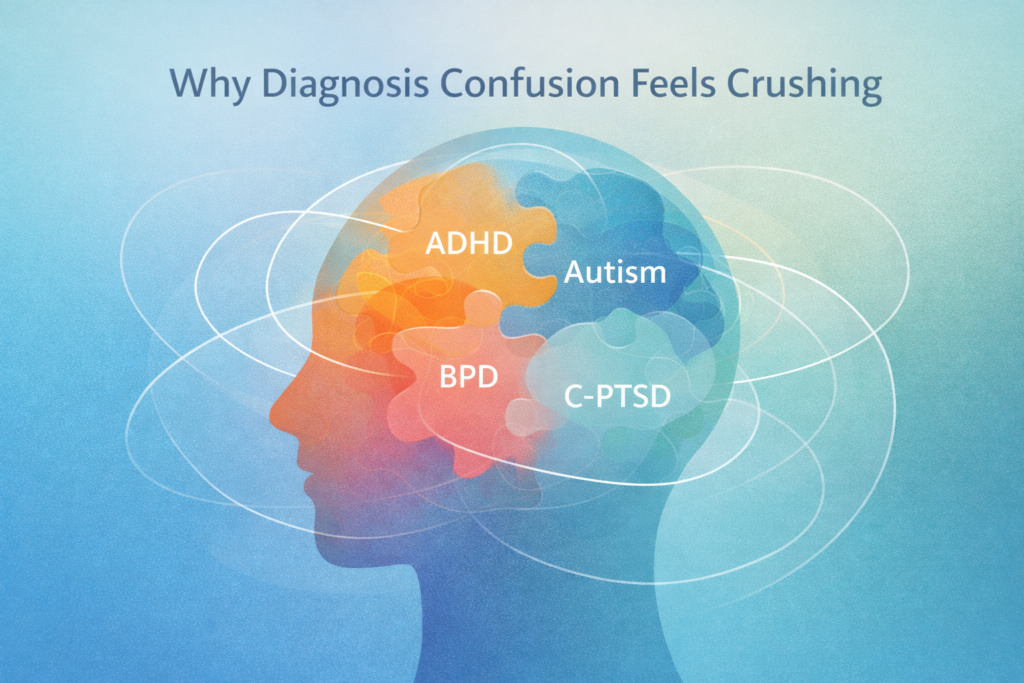
ADHD makes sense.
Then autism explains things you’ve never been able to put words to.
Then BPD descriptions sound uncomfortably familiar.
Then C-PTSD ties it all together.
And eventually, curiosity turns into shame.
Why am I still confused?
Am I just label chasing?
Why can’t I figure out what’s actually going on with me?
This post is for autistic, ADHD, and AuDHD adults — especially those with trauma — who feel stuck in diagnosis confusion and are tired of feeling like that confusion means something is wrong with them.
Diagnosis confusion is common in neurodivergent adults with trauma
One of the biggest reasons diagnosis feels so confusing is simple:
ADHD, autism, BPD, and C-PTSD overlap — a lot — in real life.
They can all involve:
- intense emotional reactions
- fear of losing people or being rejected
- deep shame and self-blame
- difficulty with identity or sense of self
- behaviors that look impulsive when pain is high
When clinicians don’t have a strong neurodiversity lens — or when trauma history isn’t fully understood — these overlaps can blur together quickly.
That doesn’t mean you’re doing diagnosis wrong.
It means the system often struggles to separate behavior from nervous-system context.
How trauma and neurodivergence shape the nervous system
Trauma doesn’t just affect memory.
It shapes how the nervous system responds to:
- conflict
- rejection
- emotional closeness
- unpredictability
- being misunderstood
Now add neurodivergence.
Autistic and ADHD nervous systems are often:
- more sensitive to stress
- more reactive to perceived rejection
- slower to return to baseline after emotional spikes
- more impacted by sensory and emotional overload
So the same event that feels manageable to someone else may feel overwhelming — or even threatening — to your body.
From the outside, this can look like a personality issue.
From the inside, it often feels like living without emotional skin.
You’re not collecting labels.
You’re trying to understand how your nervous system learned to survive.
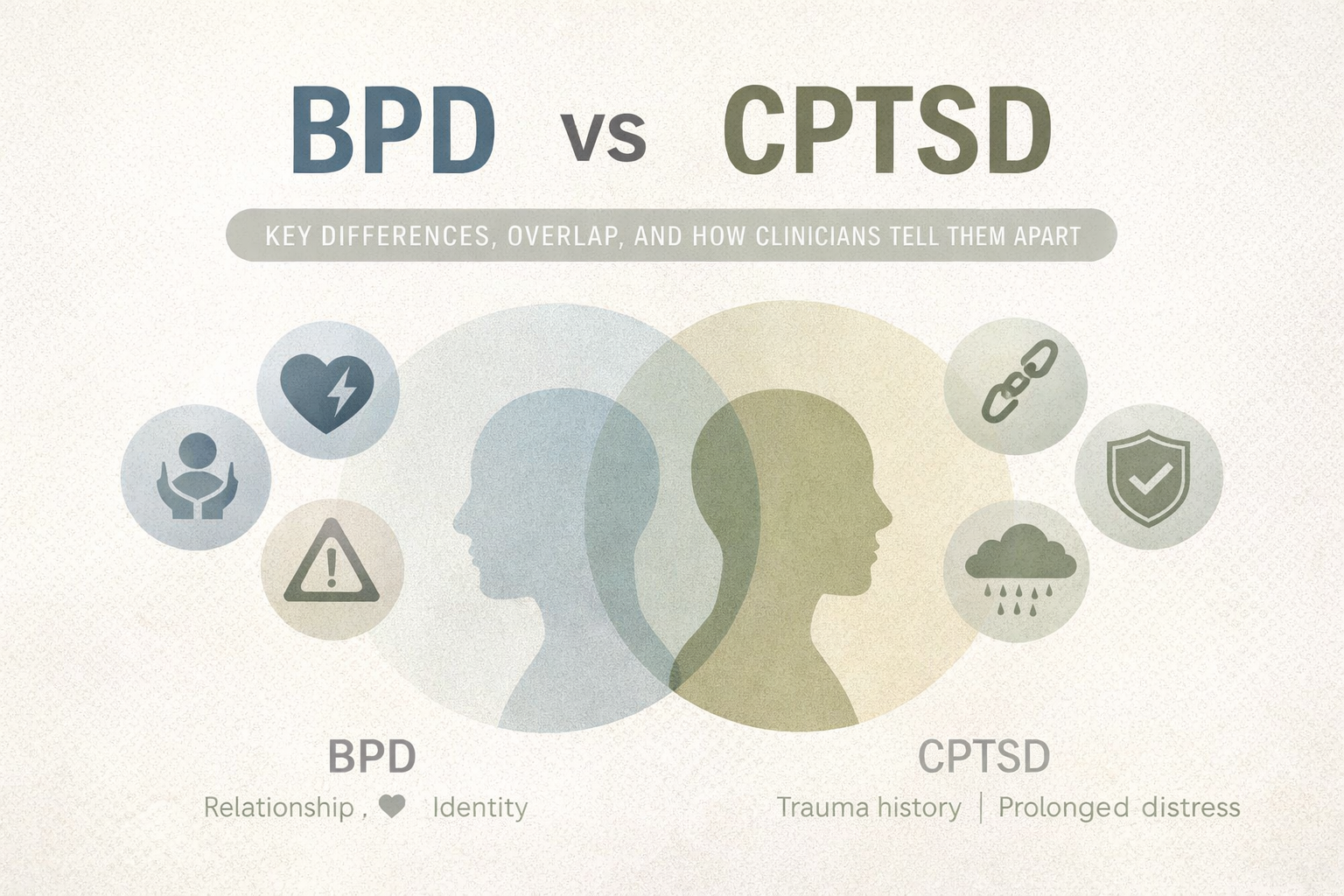
BPD vs C-PTSD: a distinction that helps (without diagnosing yourself)
This isn’t about deciding which diagnosis you “really” have.
It’s about understanding how clinicians tend to think.
When clinicians talk about BPD, they’re usually noticing:
- patterns in emotions, identity, and relationships
- that show up across many situations, even when life is relatively stable
When clinicians talk about C-PTSD, they’re usually noticing:
- a nervous system shaped by long-term relational trauma
- where symptoms intensify around threat, conflict, or attachment
Neither diagnosis comes from one meltdown.
Neither comes from one difficult relationship.
Patterns matter. Context matters. Nervous-system history matters.
And here’s what often gets missed:
👉 Autism and ADHD can create patterns that resemble either one.
Common ways autism and ADHD are misread
Understanding these misreads can reduce a lot of self-blame.
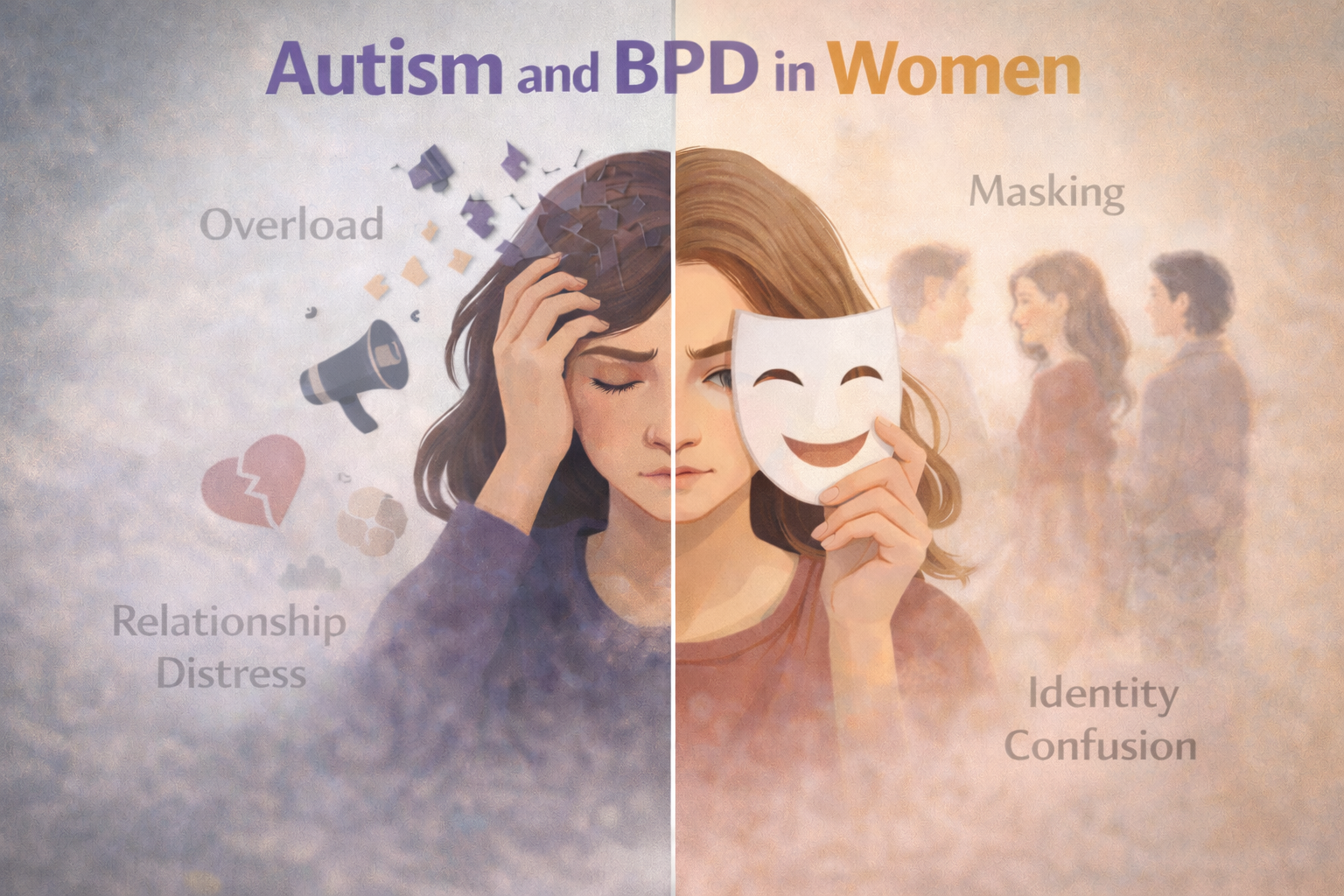
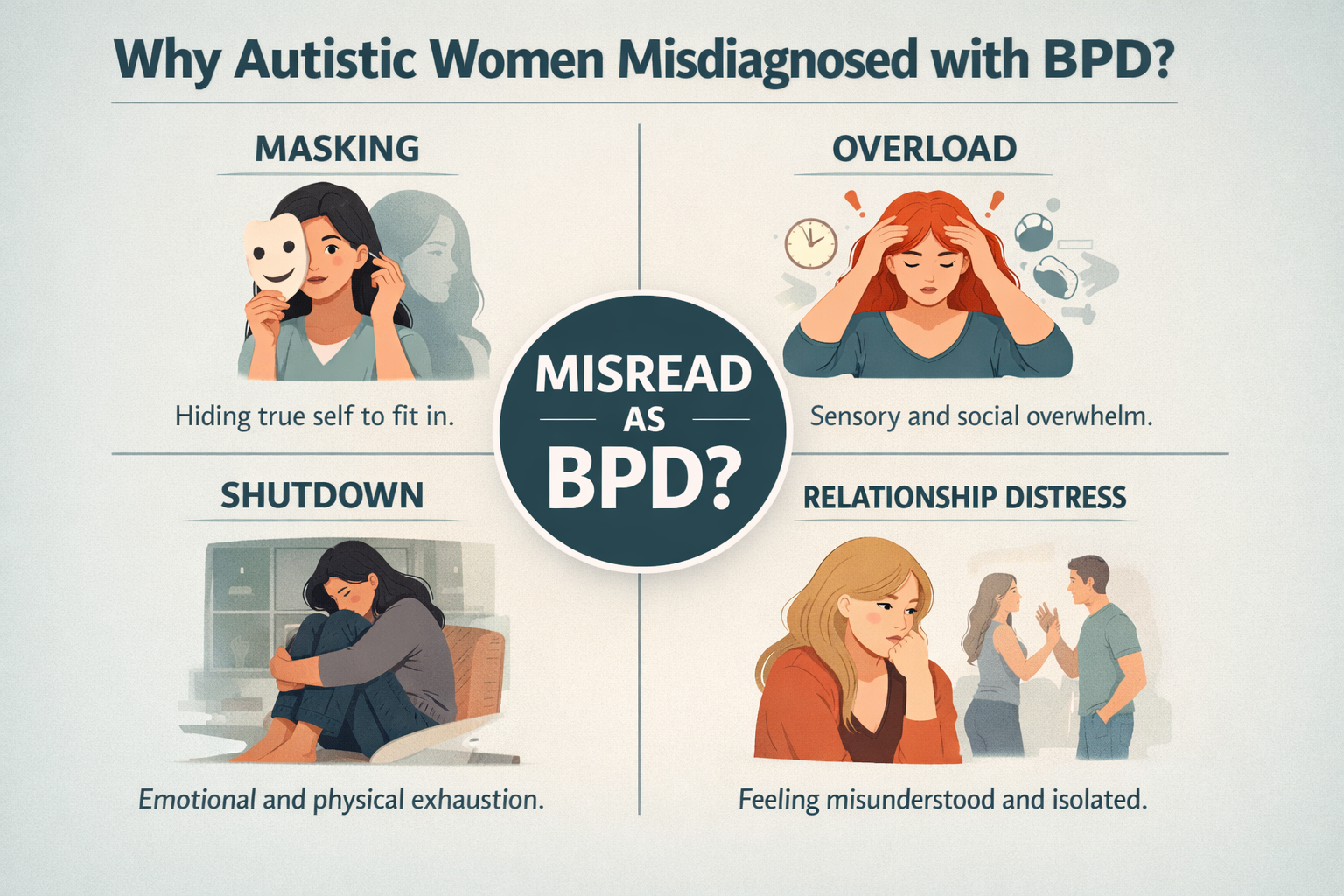
Autistic shutdown can look like:
- withdrawal
- stonewalling
- emotional coldness
But internally, it’s often:
“I am completely overloaded and cannot speak.”
Masking and burnout can look like:
- being fine until suddenly not
- emotional explosions that seem to come out of nowhere
What’s actually happening is nervous-system exhaustion.
ADHD rejection sensitivity can look like:
- overreacting
- being “too much”
- reading danger into small changes
But the nervous system is reacting as if connection itself is at risk.
A concrete example
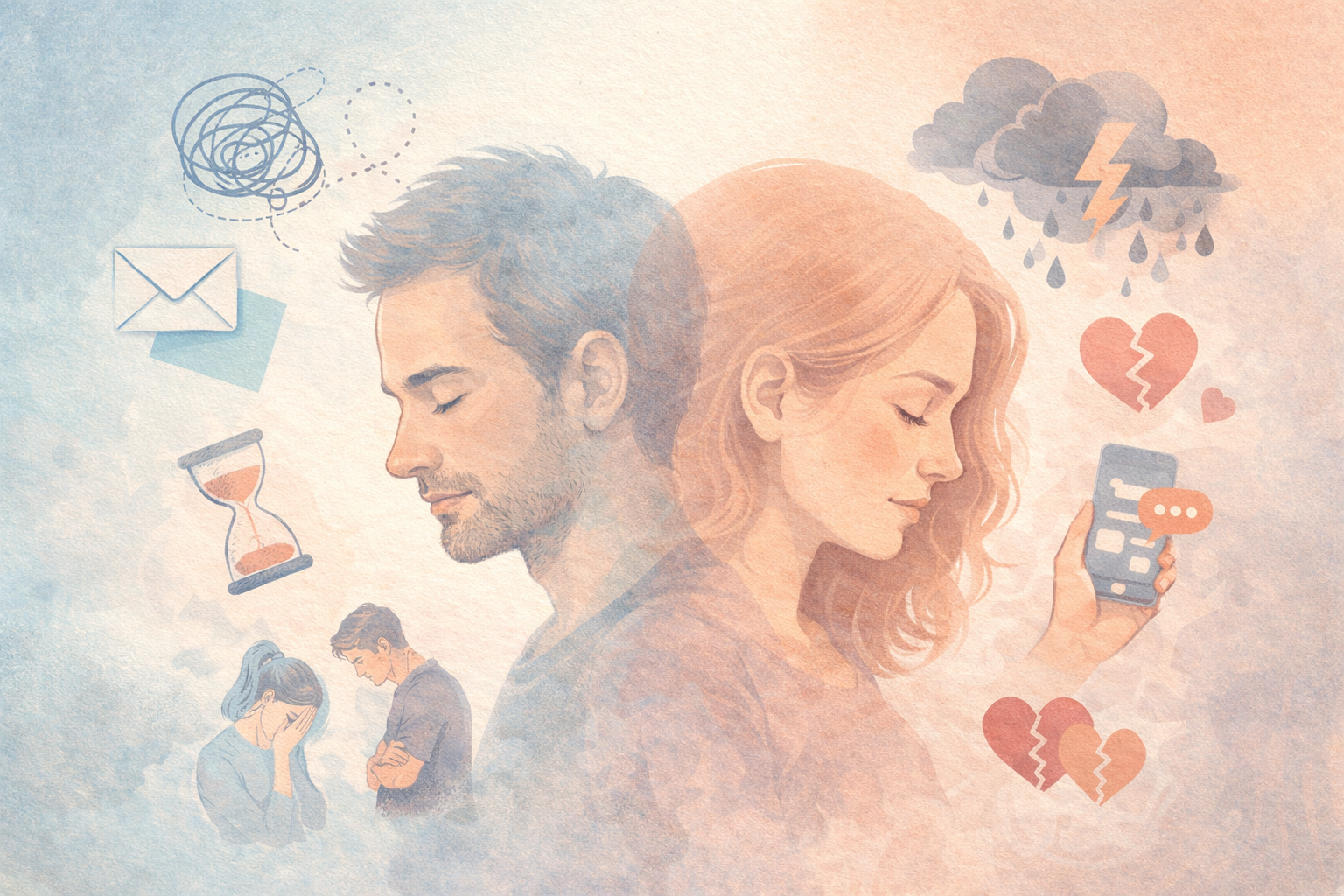
You text someone you care about.
They don’t respond for hours.
Your chest tightens.
Your thoughts spiral.
Your body feels buzzy or hollow.
You might:
- send a risky follow-up message
- shut down completely
- decide they’re done with you and pull away
From the outside, this might get labeled “BPD behavior.”
From the inside, it may be:
- autistic distress around uncertainty
- ADHD rejection sensitivity firing
- trauma memory saying, People leave. This isn’t safe.
Same behavior.
Very different nervous-system reasons.
Whatever the diagnosis, the intense moments are still real
No matter what the letters end up being —
ADHD, autism, BPD, C-PTSD, or some combination —
You still have 8–10/10 moments.
Moments where:
- emotions feel unbearable
- your body feels unsafe
- you want to escape or shut everything down
- urges to make a drastic move show up fast
While you’re sorting out labels, you still deserve practical support for those moments.
Not analysis.
Not self-judgment.
Support that helps you not make things worse while intensity is high.
When intensity is high, simple structure helps
If you’re reading this because you feel close to acting on an impulse, having something concrete to follow can help.
I created a free, plain-language support plan called When Everything Is Too Much.
Clinically, this kind of tool is often called a crisis plan — meaning extra structure during high-intensity moments, not emergency care and not a replacement for professional support.
The free PDF includes:
- a simple 0–10 check-in
- a short pause → safety → grounding checklist
- a grounding menu you can choose from without thinking
- a one-page safety snapshot
It’s designed for moments when your brain is barely online.
👉 Download the free plan here:
When Everything is Too Much Plan
(This resource doesn’t replace therapy or emergency services. If you feel unable to keep yourself safe, reaching out for immediate support matters.)
Why this kind of support works
At high intensity, your nervous system isn’t asking for insight.
It’s asking for containment.
Structure helps you:
- pause before doing something irreversible
- stay safe enough for intensity to come down
- protect your future self from extra fallout
Relief comes after containment — not before.
Frequently asked questions
Can you be autistic and have C-PTSD?
Yes. Many autistic and ADHD adults have complex trauma, especially if they grew up misunderstood, unsupported, or chronically overwhelmed.
Why are autistic people misdiagnosed with BPD?
Because shutdowns, emotional intensity, and relationship stress can look similar on the surface — especially when sensory overload and trauma aren’t recognized.
Does ADHD cause emotional dysregulation?
ADHD is associated with differences in emotional regulation, especially under stress — which can be amplified by trauma.
Do I need the “right” diagnosis to get help?
No. You can work on nervous-system support and coping tools even while diagnoses are still being explored.
If the labels feel off, that doesn’t mean you are
Diagnosis confusion doesn’t mean you’re broken.
It usually means your nervous system — and your history — are complex.
Autistic, ADHD, and AuDHD people are especially likely to have complex trauma.
That’s not a character flaw.
That’s context.
A small next step that helps many people:
download the support plan and keep it somewhere easy to reach.
You don’t have to figure everything out today.
Getting through the hard moments safely is enough for now.
Final note
This post and the free resource are for education and support — not a replacement for therapy or emergency care.
If you’re in immediate danger or unable to keep yourself safe, please contact local emergency services or a crisis line.