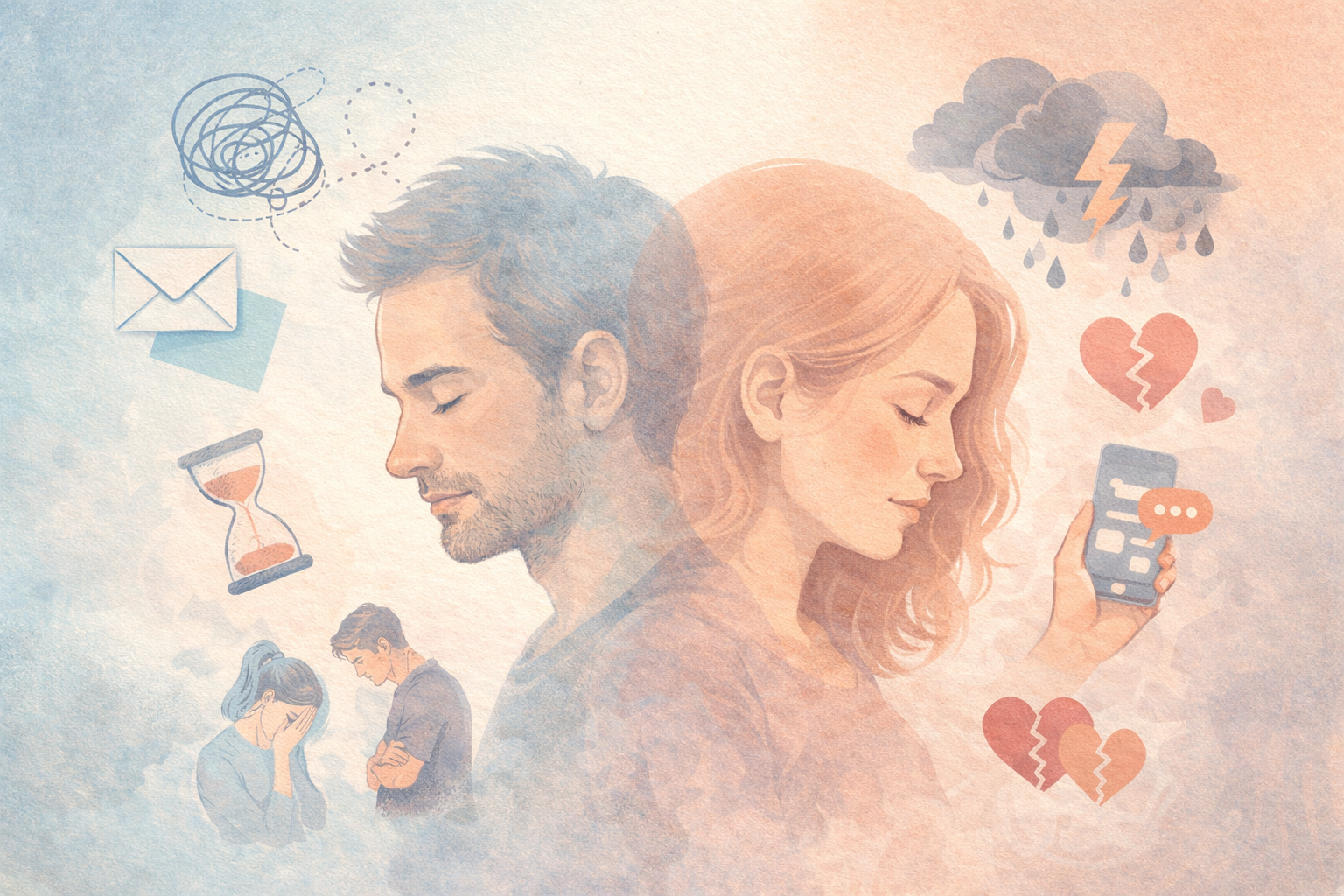
ADHD or BPD: Why These Struggles Get Confused
If you’ve ever wondered whether what you’re experiencing is ADHD or BPD, you’re not alone.
Some patterns can look strikingly similar from the outside:
• impulsive decisions
• intense emotional reactions
• rejection sensitivity
• relationship stress
• a whole day unraveling after one small moment
But similar behavior does not always come from the same underlying process.
Sometimes the system is being pulled off track by executive overwhelm.
Sometimes it is reacting to shame, perceived relationship threat, or sudden loss of emotional footing.
And sometimes the picture is more mixed than either category alone can explain.
This article walks through five everyday struggles where ADHD patterns and BPD-related patterns can look very similar on the surface — while being driven by different things underneath.
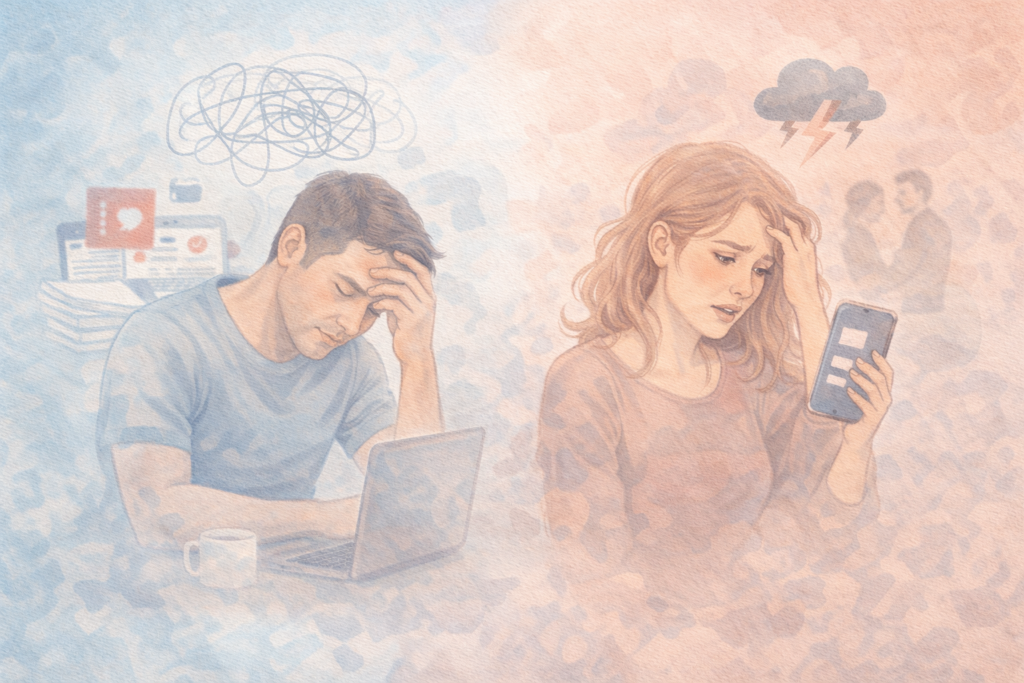
60-Second Answer
If you’re trying to understand whether something feels more like ADHD or BPD, one helpful question is often not:
“What does the behavior look like?”
It’s:
“What seems to have set the reaction off?”
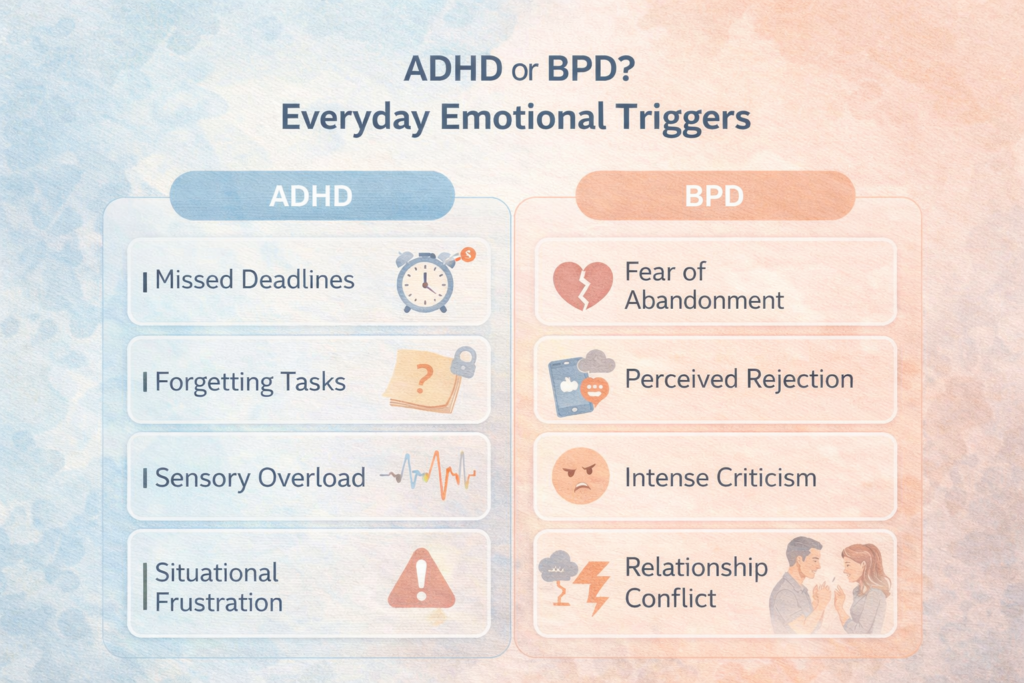
Understanding whether your struggle is ADHD or BPD often starts with noticing the trigger, not the behavior.
ADHD-related struggles often begin with:
• distraction
• executive friction
• time blindness
• overload
• frustration when tasks won’t engage
BPD-related struggles often become more visible when stress is filtered through:
• perceived rejection
• shame
• fear of abandonment
• sudden shifts in connection
• uncertainty about what a moment means for the relationship or the self
The reaction may look intense either way.
But the trigger can sometimes tell you more than the behavior alone.
If Your System Floods Fast
If your hardest moments are the ones where everything spikes at once — the moment when your brain feels offline and everything suddenly feels urgent — the When Everything Is Too Much guide is designed for exactly that state.
It focuses on the first few minutes of overwhelm, when clear thinking is hardest and the most helpful next move is often not analysis, but stabilization.
ADHD or BPD: Why They Get Confused
There are real overlaps between ADHD and BPD-related patterns.
Both can involve:
• emotional reactivity
• impulsive decisions
• rejection sensitivity
• shame spirals
• difficulty calming down once activated
Some people will relate much more to one pattern.
Some will relate to both.
And trauma, chronic stress, and other forms of neurodivergence can make the picture much harder to sort out.
One major overlap is rejection sensitivity.
Someone with ADHD may react strongly to criticism, disappointment, or feeling incompetent.
Someone with BPD-related patterns may react strongly when a moment feels like rejection, disconnection, humiliation, or sudden instability in the relationship.
From the outside, those reactions can look almost identical.
But the internal organization of the moment may be different.
One reaction may organize around overload, frustration, and cognitive friction.
Another may organize around connection, shame, fear of abandonment, or instability in how the self or other person is being experienced.
When the outside looks similar, the trigger can sometimes tell you more.
Universal First Move
Before trying to sort out which pattern fits, start here:
Slow the reaction cycle.
Pause the next move.
Reduce stimulation if you can.
Take one slower exhale than inhale.
Give your nervous system time before interpreting the moment.
The goal is not to solve the whole situation immediately.
The goal is to bring the intensity down enough that your thinking becomes more accurate.
1. Mornings Falling Apart
What it can look like
The day has barely started, and already everything feels off.
You’re rushing. Steps get missed. The routine collapses faster than it should.
ADHD
With ADHD, mornings often unravel through distraction loops and time blindness.
You go to grab your keys.
You notice the kitchen.
You check your phone.
Ten minutes disappear.
The system keeps getting pulled sideways.
What looks like “not trying” from the outside often feels more like losing hold of the sequence.
BPD-related patterns
With BPD-related patterns, the morning may collapse before it really begins.
You wake up replaying something from the night before.
A text.
A comment.
An awkward moment.
The day begins inside shame, worry, or fear that something shifted in the relationship — or in how you are now being seen.
Once the system starts organizing around emotional threat, ordinary tasks can lose their footing quickly.
Try this first
Reduce the number of morning decisions.
Use a simple visible checklist.
Delay emotional analysis until later in the day if you can.
Key insight
ADHD mornings often fall apart through distraction and time blindness.
BPD-related mornings may fall apart when emotional threat takes over the system early.
2. Work or School Spirals
What it can look like
A task that should be manageable suddenly feels impossible to enter.
ADHD
With ADHD, the barrier is often task initiation.
An email becomes complicated because it requires:
• checking dates
• opening documents
• making decisions
• holding several steps in mind
The task is small on paper, but the brain cannot find traction.
BPD-related patterns
With BPD-related patterns, things may go relatively smoothly until an interaction lands with emotional force.
A supervisor sounds short.
Feedback feels colder than expected.
Someone’s tone shifts slightly.
Now the mind begins asking:
“Did I mess something up?”
“Are they disappointed in me?”
“Did something just change?”
“Am I becoming a problem?”
Once the moment starts to feel like rejection, humiliation, or disconnection, it becomes much harder to return to the task.
Try this first
Write the smallest possible next step.
Separate the task itself from the meaning you’re giving the interaction.
Return to interpretation later.
3. Texting and Communication Stress
What it can look like
Messages start feeling heavier than they should.
ADHD
With ADHD, communication problems often begin with distraction and working-memory slips.
You see the message.
You mean to respond later.
Something else grabs your attention.
Hours later you remember with a rush of guilt.
Now replying feels emotionally loaded.
BPD-related patterns
With BPD-related patterns, distress often starts with uncertainty.
A vulnerable message goes out.
Time passes.
The silence starts to feel meaningful.
You reread the thread.
Track tone and punctuation.
Wonder if something changed.
The nervous system may start treating uncertainty as disconnection, making it difficult to hold onto a steady sense of the relationship while waiting.
Try this first
Send a short bridge reply.
Example:
“Got this — I’ll respond later today.”
Key insight
ADHD communication stress often starts with distraction or delay.
BPD-related communication stress often starts with uncertainty that quickly feels relationally loaded.
4. Sudden Decisions
What it can look like
An urge to act immediately feels intense.
ADHD
ADHD impulsive decisions often come from:
• boredom
• frustration
• novelty-seeking
• mental friction
The brain wants out of stuckness.
So the decision might look like:
buy it
change the plan
drop the project
BPD-related patterns
With BPD-related patterns, urgency often follows emotional pain, shame, fear of abandonment, or sudden loss of internal footing.
A relationship moment feels unstable.
The urge becomes:
text now
quit now
cut them off
do something immediately
From the inside, the action can feel less like impulsivity and more like trying to stop emotional freefall or unbearable uncertainty.
Try this first
Delay major decisions when intensity is high.
Name what problem the action is trying to solve.
5. The Bad Day Spiral
What it can look like
One difficult moment spreads until the entire day feels ruined.
ADHD
ADHD spirals often begin with life-management chaos.
Missed deadlines.
Lost items.
Dropped responsibilities.
The shame centers on competence:
“Why can’t I stay on top of basic things?”
BPD-related patterns
With BPD-related patterns, spirals often center on connection, shame, and what the hard moment seems to mean about the self.
A tense interaction can start to feel like evidence that everything is falling apart.
The thoughts may sound like:
“I ruined this.”
“They’re done with me.”
“I’m too much.”
“I don’t even know who I am when this happens.”
The reaction is not only about the relationship — it can also destabilize how the self feels in that moment.
Try this first
Pause interpretation while intensity is high.
Lower stimulation.
Postpone confrontation or repair until you regain some footing.
Key insight
ADHD shame often centers on competence and falling behind.
BPD-related shame often centers on connection, self-worth, and what the moment seems to mean about the self.
Try This Now
When a reaction is escalating, try this short reset:
Pause your next action.
Rate intensity from 0–10.
Take one slower exhale than inhale.
Ask:
Is this moment feeling more like overload… or more like threat?
Even a small pause can interrupt the spiral.
If You Already Reacted (Repair in 10 Seconds)
A simple repair line can help:
“I think I reacted while overwhelmed. Let me reset and come back to this.”
Short repair attempts are often more effective than long explanations while still flooded.
Common Mistakes
• assuming emotional intensity automatically means BPD
• assuming distraction automatically means ADHD
• diagnosing based on one trait
• ignoring trauma or chronic stress
• analyzing the situation while fully flooded
Real patterns are rarely that simple.
ADHD or BPD FAQs
Can someone have both ADHD and BPD?
Yes. Some people experience both executive-function challenges and BPD-related patterns around attachment, shame, emotional intensity, or self-state instability.
Is rejection sensitivity only part of BPD?
No. Rejection sensitivity can be very intense in ADHD as well.
Does trauma complicate the difference?
Yes. Trauma can amplify both overload responses and relationship-threat responses.
Should I diagnose myself from this article?
No. Articles like this are best used for pattern awareness, not diagnosis.
What helps both patterns?
Grounding, slowing reaction cycles, reducing stimulation, and having a clear plan for high-intensity moments.
What if the reactions feel unbearable?
If you feel unsafe or unable to cope in the moment, reach out for immediate support:
https://988lifeline.org/
What to Do Next
Paying attention to what sparks a reaction can help you understand whether it’s ADHD or BPD in the moment.
If you want to understand your reactions more clearly, pay attention to what happens before the spiral.
Not just what the reaction looked like.
But what the system believed it was reacting to.
When the outside looks similar, the trigger can sometimes tell you more than the behavior alone.
And if the hardest part is what happens when everything floods at once, start with the When Everything Is Too Much guide.
In high-intensity moments, a simple stabilizing plan is often more helpful than a perfect explanation.